Welcome to NOVA’s Campus Advocacy Training (NCAT) 2027! NCAT is a five-week hybrid training program designed for campus advocates and community-based advocates serving college populations, offering a unique opportunity for professional growth. Facilitated by national campus experts, the training covers a wide range of topics such as ethics and boundaries, confidentiality, privacy and privilege, language justice, federal laws, restorative justice, forensic exams, and more. NCAT will be offered from January 27 through February 24, 2027 (Wednesdays only) from 11:00 AM to 5:00 PM (EST). This training is virtual only, with occasional pre-work and homework materials and three required asynchronous trainings. Participants of this unique academy will be able to use CEU credits to fulfill the National Advocate Credentialing Program (NACP) renewal requirements. Read more
Content
Price


This training is accepted by the NACP for 10 CEs and includes 2 CEs in victim advocacy-ethics training. You will receive one Certificate of Completion at the end of the Learning path. This means you will need to complete all 5 courses that are part of the learning path, and you will then be provided with 1 certificate that acknowledges completion of all 10 CEUs of training. Visit the NACP's website Questions? Email: Credential@TheNACP.org Read more
Content
Price
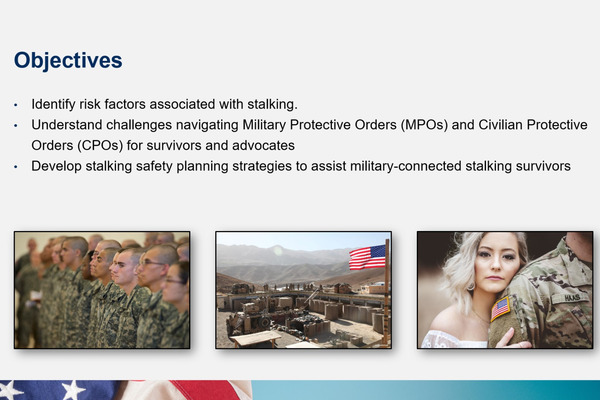
Planificación de la seguridad y desafíos jurisdiccionales para sobrevivientes de acoso vinculados con el ejército La planificación de la seguridad con sobrevivientes con vínculos militares requiere gestionar sistemas complejos, una autonomía limitada y jurisdicciones superpuestas. En esta sesión, examinaremos cómo evaluar el riesgo y crear planes de seguridad realistas para sobrevivientes que viven dentro o fuera de la base. Los participantes explorarán las barreras únicas que enfrentan los sobrevivientes, desde la supervisión del mando y la aprobación de alojamiento hasta el miedo a las represalias o el sabotaje profesional, y desarrollarán estrategias prácticas basadas en la autonomía de los sobrevivientes. Los estudios de caso y las hojas de consejos ayudarán a consolidar el aprendizaje. Safety planning with military-connected survivors requires navigating complex systems, limited autonomy, and overlapping jurisdictions. In this session, we’ll examine how to assess risk and create realistic safety plans for survivors living on or off base. Participants will explore the unique barriers survivors face and develop practical strategies grounded in survivor autonomy. Case studies and tip sheets will help anchor learning. This project was supported by Grant No.15JOVW-24-GK-03011-MUMU and 15JOVW-22-GK-04039-MUMU awarded by the Office on Violence Against Women, U.S. Department of Justice. The opinions, findings, conclusions, and recommendations expressed in this program are those of the author(s) and do not necessarily reflect the views of the Department of Justice. Read more
Rating
Content
Price
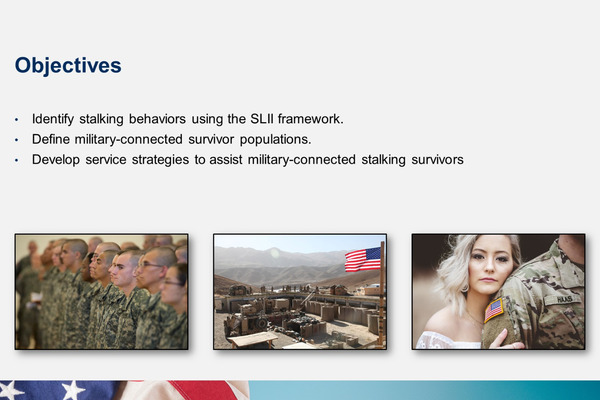
Tácticas invisibles: Apoyo a sobrevivientes de acoso con vínculos militares Los sobrevivientes con vínculos militares experimentan el acoso de maneras que a menudo se ocultan, minimizan o malinterpretan. Esta capacitación básica introduce el marco SLII (Vigilancia, Invasión de la Vida, Intimidación e Interferencia) y explora cómo opera el acoso en entornos militares. Esta sesión sienta las bases para identificar el acoso y comprender su impacto en las personas con vínculos militares. La Organización Nacional para la Defensa de las Víctimas (NOVA) y el Centro de Prevención, Concientización y Recursos sobre el Acoso (SPARC) colaboran para impartir esta capacitación de alta demanda dirigida a defensores comunitarios, fuerzas del orden, personal legal, jueces y profesionales aliados. Military-connected survivors experience stalking in ways that are often hidden, minimized, or misinterpreted. This foundational training introduces the SLII (Surveillance, Life Invasion, Intimidation, Interference) framework and explores how stalking operates within military environments. This session sets the groundwork for identifying stalking and understanding its impact on military-connected individuals. The National Organization for Victim Advocacy (NOVA) and The Stalking Prevention, Awareness, and Resource Center (SPARC) partner to deliver this high-demand training for community advocates, law enforcement, legal personnel, judges, and allied professionals. This project was supported by Grant No.15JOVW-24-GK-03011-MUMU and 15JOVW-22-GK-04039-MUMU awarded by the Office on Violence Against Women, U.S. Department of Justice. The opinions, findings, conclusions, and recommendations expressed in this program are those of the author(s) and do not necessarily reflect the views of the Department of Justice. Read more
Rating
Content
Price
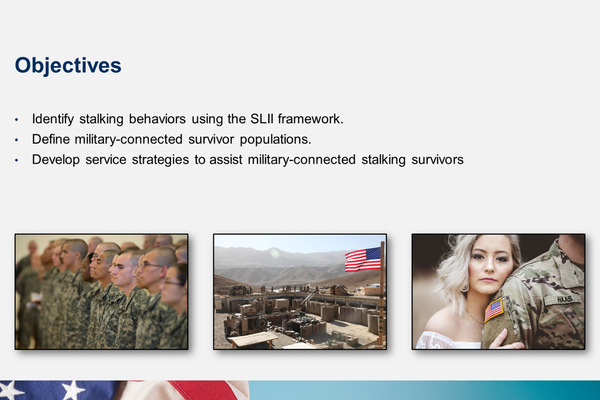
Military-connected survivors experience stalking in ways that are often hidden, minimized, or misinterpreted. This foundational training introduces the SLII (Surveillance, Life Invasion, Intimidation, Interference) framework and explores how stalking operates within military environments. This session sets the groundwork for identifying stalking and understanding its impact on military-connected individuals. This project was supported by Grant No.15JOVW-24-GK-03011-MUMU and 15JOVW-22-GK-04039-MUMU awarded by the Office on Violence Against Women, U.S. Department of Justice. The opinions, findings, conclusions, and recommendations expressed in this program are those of the author(s) and do not necessarily reflect the views of the Department of Justice. Read more
Rating
Content
Price
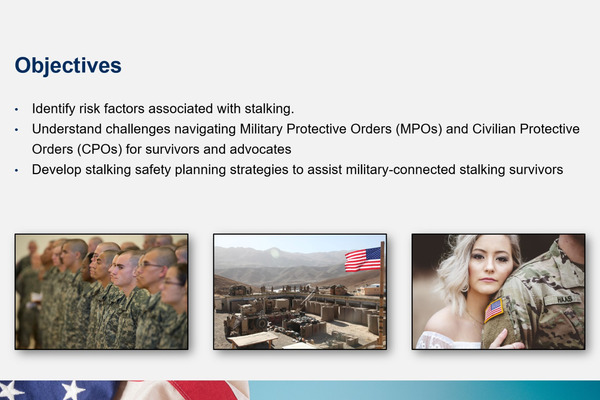
Safety planning with military-connected survivors requires navigating complex systems, limited autonomy, and overlapping jurisdictions. In this session, we’ll examine how to assess risk and create realistic safety plans for survivors living on or off base. Participants will explore the unique barriers survivors face and develop practical strategies grounded in survivor autonomy. Case studies and tip sheets will help anchor learning. This project was supported by Grant No.15JOVW-24-GK-03011-MUMU and 15JOVW-22-GK-04039-MUMU awarded by the Office on Violence Against Women, U.S. Department of Justice. The opinions, findings, conclusions, and recommendations expressed in this program are those of the author(s) and do not necessarily reflect the views of the Department of Justice. Read more
Rating
Content
Price
Shopping cart
Your cart is empty