.png)
This training is accepted by the NACP for 10 CEs and includes 2 CEs in victim advocacy-ethics training. You will receive one Certificate of Completion at the end of the Learning path. This means you will need to complete all 5 courses that are part of the learning path, and you will then be provided with 1 certificate that acknowledges completion of all 10 CEUs of training. Visit the NACP's website Questions? Email: Credential@TheNACP.org Read more
Content
Price

.png)
The NOVA Victim Assistance Academy™ (NVAA) is a forty-hour virtual training for aspiring and new victim assistance professionals. Offered biannually, this unique NOVA academy provides comprehensive, skill-based training ideal for those new to the field, although we welcome advocates at any level! You will learn from 20 nationally recognized Subject Matter Expert(SME) Faculty Members, who you’ll have access to interact directly with. Interested in becoming a Credentialed Advocate (CA) with the National Advocate Credentialing Program (NACP)? The NVAA is an NACP Pre-Approved “A” Level Training; this means that after completing the NVAA you will be able to meet the training requirement to become a Provisional Level Credentialed Advocate with the NACP. The NVAA covers 20 integral topics that together form a comprehensive, trauma informed foundation for a victim advocate. NVAA Faculty bring experience from the National Alliance on Mental Illness (NAMI), Stalking Prevention, Awareness, and Resource Center (SPARC), the National Center on Elder Abuse (NCEA), the Peace Corps, NOVA and more! The NVAA is offered as a Hybrid Model with a combination of live and asynchronous (pre-recorded) virtual training, that allows more flexibility. 20 hours of live virtual training 20 hours of asynchronous training To earn a certificate of completion, students must attend ALL live class days, watch all asynchronous trainings, and complete the corresponding class survey for all live AND asynchronous courses. Live Class Schedule: Thursdays from 1pm – 6pm ET (1 hr lunch break) from October 15 through November 12 October 15, October 22, October 29, November 5, November 12 Click here for a Fall 2026 Agenda. Registration Rates: NOVA Members - $350; Non-Members - $400 A group discount is available for five (5) or more students registering from the same organization. Email nvaa@trynova.org with the names and emails of your group to receive the discount code. Register by August 31st at midnight ET and use coupon code EarlyThursday-F26NVAA for 10% off your registration! Registration will close after Monday, October 5th or when capacity is reached. Cancellation/Refund Policy: A full refund minus processing fee is available through October 5th; after October 5th no refunds will be available. NOVA Members: If you qualify for the NOVA Member Rate but are not seeing it reflected, please contact NVAA@Trynova.org to have your member status updated in NOVA's Online Education Center. We are unable to refund the cost difference if you pay the non-member rate. SCHOLARSHIP APPLICATION: We are able to offer a limited amount of training scholarships, click here to apply! All scholarship applications must be received by end of day on Monday, August 24th. Applicants will be notified of whether they received a scholarship or not by Friday. August 28th. Questions? Email NVAA@trynova.org Read more
Rating
Content
Price
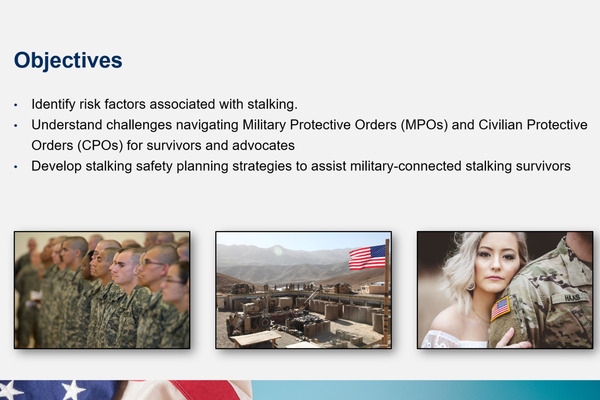
Planificación de la seguridad y desafíos jurisdiccionales para sobrevivientes de acoso vinculados con el ejército La planificación de la seguridad con sobrevivientes con vínculos militares requiere gestionar sistemas complejos, una autonomía limitada y jurisdicciones superpuestas. En esta sesión, examinaremos cómo evaluar el riesgo y crear planes de seguridad realistas para sobrevivientes que viven dentro o fuera de la base. Los participantes explorarán las barreras únicas que enfrentan los sobrevivientes, desde la supervisión del mando y la aprobación de alojamiento hasta el miedo a las represalias o el sabotaje profesional, y desarrollarán estrategias prácticas basadas en la autonomía de los sobrevivientes. Los estudios de caso y las hojas de consejos ayudarán a consolidar el aprendizaje. Safety planning with military-connected survivors requires navigating complex systems, limited autonomy, and overlapping jurisdictions. In this session, we’ll examine how to assess risk and create realistic safety plans for survivors living on or off base. Participants will explore the unique barriers survivors face and develop practical strategies grounded in survivor autonomy. Case studies and tip sheets will help anchor learning. This project was supported by Grant No.15JOVW-24-GK-03011-MUMU and 15JOVW-22-GK-04039-MUMU awarded by the Office on Violence Against Women, U.S. Department of Justice. The opinions, findings, conclusions, and recommendations expressed in this program are those of the author(s) and do not necessarily reflect the views of the Department of Justice. Read more
Rating
Content
Price
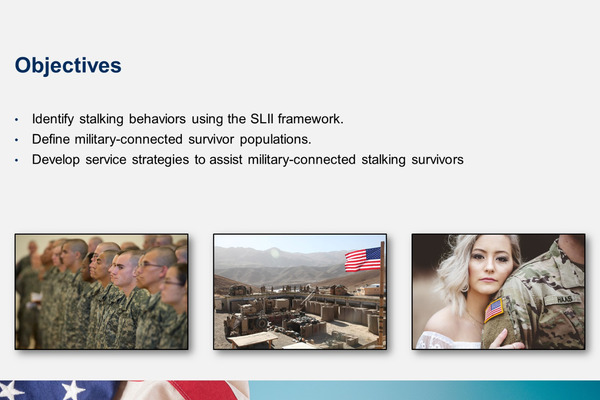
Tácticas invisibles: Apoyo a sobrevivientes de acoso con vínculos militares Los sobrevivientes con vínculos militares experimentan el acoso de maneras que a menudo se ocultan, minimizan o malinterpretan. Esta capacitación básica introduce el marco SLII (Vigilancia, Invasión de la Vida, Intimidación e Interferencia) y explora cómo opera el acoso en entornos militares. Esta sesión sienta las bases para identificar el acoso y comprender su impacto en las personas con vínculos militares. La Organización Nacional para la Defensa de las Víctimas (NOVA) y el Centro de Prevención, Concientización y Recursos sobre el Acoso (SPARC) colaboran para impartir esta capacitación de alta demanda dirigida a defensores comunitarios, fuerzas del orden, personal legal, jueces y profesionales aliados. Military-connected survivors experience stalking in ways that are often hidden, minimized, or misinterpreted. This foundational training introduces the SLII (Surveillance, Life Invasion, Intimidation, Interference) framework and explores how stalking operates within military environments. This session sets the groundwork for identifying stalking and understanding its impact on military-connected individuals. The National Organization for Victim Advocacy (NOVA) and The Stalking Prevention, Awareness, and Resource Center (SPARC) partner to deliver this high-demand training for community advocates, law enforcement, legal personnel, judges, and allied professionals. This project was supported by Grant No.15JOVW-24-GK-03011-MUMU and 15JOVW-22-GK-04039-MUMU awarded by the Office on Violence Against Women, U.S. Department of Justice. The opinions, findings, conclusions, and recommendations expressed in this program are those of the author(s) and do not necessarily reflect the views of the Department of Justice. Read more
Rating
Content
Price
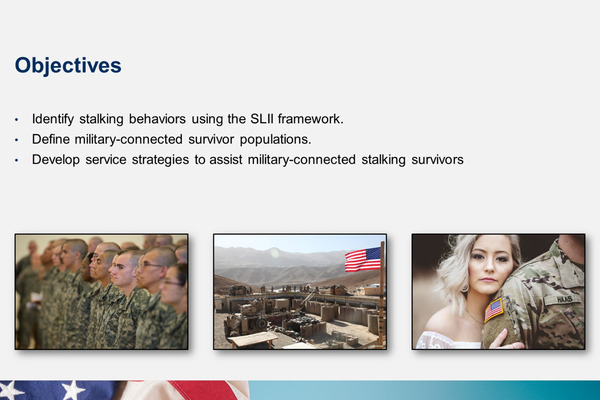
Military-connected survivors experience stalking in ways that are often hidden, minimized, or misinterpreted. This foundational training introduces the SLII (Surveillance, Life Invasion, Intimidation, Interference) framework and explores how stalking operates within military environments. This session sets the groundwork for identifying stalking and understanding its impact on military-connected individuals. This project was supported by Grant No.15JOVW-24-GK-03011-MUMU and 15JOVW-22-GK-04039-MUMU awarded by the Office on Violence Against Women, U.S. Department of Justice. The opinions, findings, conclusions, and recommendations expressed in this program are those of the author(s) and do not necessarily reflect the views of the Department of Justice. Read more
Rating
Content
Price
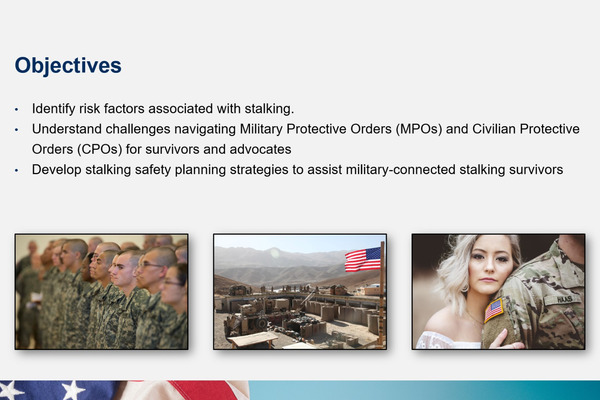
Safety planning with military-connected survivors requires navigating complex systems, limited autonomy, and overlapping jurisdictions. In this session, we’ll examine how to assess risk and create realistic safety plans for survivors living on or off base. Participants will explore the unique barriers survivors face and develop practical strategies grounded in survivor autonomy. Case studies and tip sheets will help anchor learning. This project was supported by Grant No.15JOVW-24-GK-03011-MUMU and 15JOVW-22-GK-04039-MUMU awarded by the Office on Violence Against Women, U.S. Department of Justice. The opinions, findings, conclusions, and recommendations expressed in this program are those of the author(s) and do not necessarily reflect the views of the Department of Justice. Read more
Rating
Content
Price
Shopping Cart
Your cart is empty